Podcast Episode: The New Language of Neurodiversity, Decolonization, Depathologization: On Location at the ISPS Conference with Six Voices on a Mission (S5, E16)
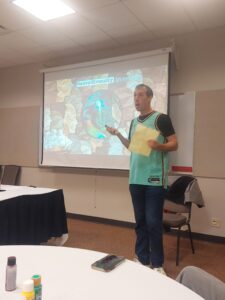
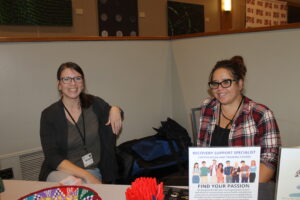
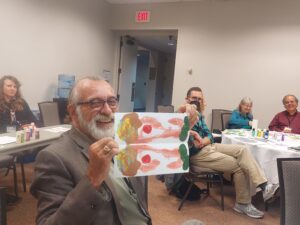
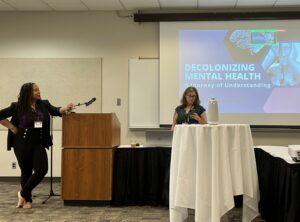
In 2023, I had the opportunity to cover a conference organized by The International Society for Psychological and Social Approaches to Psychosis (ISPS), a pioneering organization with almost 70 years of advocating for transformative psychosocial understandings and approaches to psychosis, which restore personhood, dignity, and well-being. The weekend-long conference held at the University of Delaware from October 27th-29th gathered clinicians, researchers, advocates, and people with lived experience, including family members and allies, who are deeply invested in advancing psychological and social approaches to “psychosis,” while moving beyond frameworks of deficit and disease.
The diverse stories of those with lived experience, whose identities or narratives have been traditionally marginalized or oppressed, were presented alongside practitioners crafting new theories on psychosis. Seminars highlighted everything from the power of breathwork and artmaking to seeing psychosis through the lens of spiritual transformation, to normalizing voice-hearing, healing systemic trauma, and uprooting the narrative of pathologization.
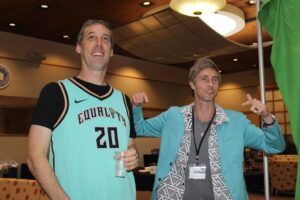
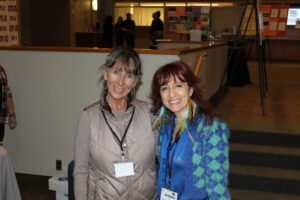
Connecting with a community of likeminded individuals, who recognize that the mental health system needs transformation beyond the biomedical paradigm, was a riveting experience, and interviewing a variety of voices coming from different theoretical orientations and connections to the mental health industry was a great honor. I chat with six speakers at the event, who cover a variety of topics ranging from spiritual transformation in psychosis, decolonization, neurodiversity, and cross-movement solidarity.
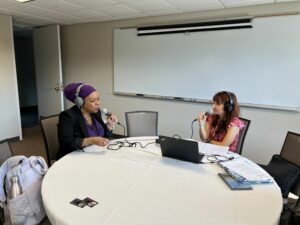
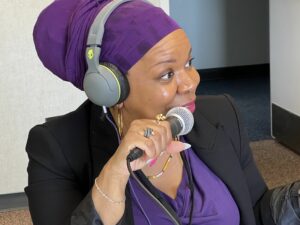

The transcripts that follow shares these interviews:
Listen to the full episode, “The New Language of Neurodiversity, Decolonization, Depathologization: On Location at the ISPS Conference with Six Voices on a Mission (S5, E16)” here: https://www.buzzsprout.com/1462411/14041933
Part 1: Vesper Moore
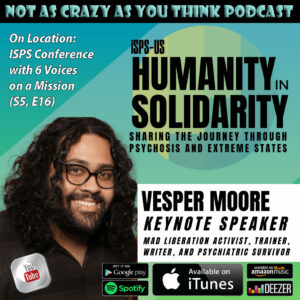
Vesper Moore is an indigenous political activist, leader, organizer, public speaker and educator in the psychiatric survivor and Disability Rights Movements. Vesper has brought the perspectives of mad, labeled “mentally ill,” neurodivergent, disabled people and survivors to national and international spaces with their advocacy. Vesper works with both the United States government and the United Nations in shaping strategies around trauma, intersectionality, and disability rights. They’ve been at the forefront of legislative reform to shift the societal paradigm surrounding mental health.
Jen
Okay, so we have Vesper Moore with us, the person who came through with this extraordinary keynote. So your keynote title is “Collective Liberation: Navigating the Path to Mental Health, Activism and Autonomy.” You are such an incredible activist, Vesper. We love how you are coming forward and trying to really unite all these intersecting areas. As a more collective unit, we can actually achieve more, correct? So tell us a little bit about that vision of yours overall, who should be coming together in this common movement?
Vesper
Absolutely. And it’s always great to be here, and thank you, as always. So, I mean the whole purpose of the keynote was really to focus on cross movement solidarity and action and coming together. And we did a panel that also discussed cross movement solidarity. But I think when I think about this right now, particularly, over the years, I’ve seen so many different movements fight for bodily autonomy. But when we talk about mental health activism, people focus usually in the mainstream on access to mental health treatment, and access to mental health treatment, regardless of what that means for someone. It could be coercive, it could be painful, it could be a lot of things. And I was like, we never talk about bodily autonomy as it relates to involuntary commitment, or psychiatric medications, or these wide variety of things. The right over our body, the effects that things can have on our body, the effects of stress on our body, parents making choices for us, guardianships, all of these things, and conservatorships. So for me, the reason why I’m talking about cross movement solidarity is that there’s such a rise right now in losing rights that relate to our bodies. You see that in the reproductive justice space, you see that in the LGBTQ community, you see that in our space within the mental health space, you see that in the disability space, as it relates to conservatorship and guardianship. Prison reform also is another space where we talk about it—the US having the most incarcerated people in the world. And there’s direct correlation with what mental health treatment looks like in prison settings and why people say access to mental health treatment is best in getting people out of prisons and trying to ensure that people don’t go to prison in the first place. But what they don’t understand is, is that the institutions historically have been there and in a way that has disappeared people, has harmed people. And we see this modernization of the psychiatric institution that’s particularly dangerous because it is very kind and modern-seeming on the surface, but it is insidious in the pain and the autonomy it removes from individuals and survivors.
Jen
Right. You bring up the bodily autonomy, and it’s so true. I always think to myself, all of these movements are moving forward at a pretty widening pace, which is great, but I’m not hearing that forcing medication upon somebody is an act of violence in a way.
Vesper
Right.
Jen
And it’s often left out of the conversation. So I really do appreciate you bringing that to light because why not unite these movements? We can pick up more speed. And this is what they did in the 60s, right?
Vesper
That’s right.
Jen
It wasn’t just about civil rights. It was about women rights, it was about, you know, all these different groups coming together, and that’s what made change. I think that is a larger vision that needs to be adopted by more people. And I feel like this conference had a little bit of the coloring of that because it seems as though so many people came together in this unification on a different level. Do you feel that this took place at the conference?
Vesper
I do. I do. And I mean, historically, when we look at these things, it’s anti-violence movements, it’s peace movements, it’s anti-war movements, and it’s a lot of different things. And there’s so much that’s impacting our world today, globally. And I think when we don’t think about the impact of violence and kind of the continuum of violence and how it exists in our lives, not just systemically, but socially, interpersonally, how we cause harm to each other, how we approach things in a really punitive type of way—so what I mean by that is if someone has a mental health diagnosis or what’s often called a mental health condition, and you believe that they can’t do what they need to do for their own life, but you also believe that they’re unpredictable, and that they’re going to harm someone, and that there’s all of these assumptions that you are making in your own mind about this person, that there are some profoundly impacting behaviors and decisions that can be made by people who have power over your life. And there’s a whole legal system that really allows and facilitates that to happen, right? Whether someone is deemed competent or incompetent in court, whether they can represent themselves, whether if a person is able to make decisions on their own, if they’re in a conservatorship or a guardianship, whether if it’s a supported decision, right? But someone still has the upper hand and what that looks like for that person’s life—if they’re in a group living environment, or a state institution, or any of these varieties of settings. What I really centered in my keynote, an important statement that I’d like to share is a quote by Angela Davis. The original quote is “Prisons don’t necessarily help people, they disappear people.” And I arguably say that the psych institution doesn’t necessarily fully help people, they disappear people. And I think people can define the support that they received there as helpful. But, you know, what does it take for us to realize we don’t have to coerce and hurt people in order to help them? You know help that isn’t helpful is not helpful, as another keynote speaker at this conference, Pat Deegan, would say.
Jen
Yeah, it’s interesting, because, you know a lot of people do walk away with this sense of, Well, you know, the meds did help me or that hospitalization did help me, and I’m not discounting that. However, they don’t realize that they possibly have healed because of their own agency, you know? And in some capacity, they were told along the way that they don’t have that ability, so they believe that the system is helping them do it. But most of the time when people heal, it’s because they found something within and then discovered the healing process. How do you feel that the system as is, gets in the way more than is helpful? I mean, we do know it, we’ve experienced it ourselves. But in being in this movement so long, what do you find are the most common areas of say, not being helpful, but harmful?
Vesper
That’s a very good question because there’s a lot of different ways. The way I usually like to think about this is that there are many different forms of policing. So there are officers who work in the realm of law enforcement, right? There are mental health professionals who police, there are social workers who police, and they have historically. You know, white social workers have taken away black and brown children from their families, right? Historically, we’ve seen this. And with mental health professionals, we’ve seen this coordinated effort by both the provider and the family member to make a decision for the person.
Jen
Right.
Vesper
I’ve been talking about it kind of throughout the conference while we were here that parents replicate the carceral behaviors of providers. So for example, people that I’ve worked with throughout the years and that I’ve supported have said, but Vesper you don’t understand, you’re not as sick as my kid. You’re not as sick as my client. You’re not as sick as blah, blah, blah, right? Like these statements are, I think, a worldview that is imposed, that is shared in that way.
Jen
Yes. I know particularly with my parents, they give themselves over to the authorities, no matter what, because they lack the the insight and also the education. You brought up that statistically, it’s proven that the black and brown community are oftentimes much more medicated, much more diagnosed. I see that as a teacher as well in the education system, that that’s the first thing they pull out. And again, with the sense that they’re helping, and then the parents get pulled into the story. But you know, wouldn’t it be great to empower people to create their own stories? And you had mentioned in the keynote, that this storytelling is an indigenous practice. How do you feel things may change if more power was put into the hands of others interpreting their own mental illness in their own words, in their own stories?
Vesper
I think, contextually speaking, even from a systemic and a medical outcomes perspective, you would have better social and health outcomes, if you really, really focused from a perspective of that person’s experience, because you would gain context around what might be re-traumatizing for them. What might be really challenging for them, what resources may or may not work for them, by understanding their story and what they’ve gone through. One example that I share, because I’m also a content creator, is different stories on different issues where often the context was missing. So one example is in San Jose, California, there was a medical facility that had 200 Cambodian patients. 180 of those Cambodian patients were diagnosed with either schizophrenia or some type of psychotic disorder. It was in their notes. And a new doctor had come to that medical facility. And they ended up having a psychologist join him who was also Cambodian. And they were like, these are alarmingly high numbers. Why is this? And they ended up looking into it a little bit. And the patients were describing some of the same things. They had shadowy figures sitting on their stomachs at night, that they were in a state of paralysis. What they were describing was very much sleep paralysis. And they’re like, that’s interesting. These experiences look similar kind of across the board. Upon investigating further and having cultural context of a professional, who was Cambodian, in that space, they realize, Oh, wow, pretty much all 180 of these patients are survivors of the Cambodian genocide.
Jen
Oh my goodness.
Vesper
And these traumatic experiences were a manifestation of complex trauma. So I use this example because with these specific personal pieces of context, we get better health outcomes, we find ways to offer better supports to people. And from an indigenous perspective, as an indigenous person, storytelling is central to us as human beings, as communities, as ways of knowing each other and as ways of fostering care in those communities.
Jen
Right. I mean it’s really interesting too, because, you know, this conference is really all centered around psychosis. And, you know, one of the things that you mention is that the way the system is set up today, we’ve developed a systemic arrangement where we are weaponizing these altered states, and yet I see here all the lived experience people telling their own stories in different ways. It’s a brand new system of language that we can use, if we go about it differently. How did we get to this weaponization? I mean, I know the DSM III took away the whole idea of context, and this is what they’re teaching the current slew of psychiatrists that are going into the practice today. What else do you see is contributing to that?
Vesper
There’s so many different components here. I think there’s a system of Medicaid and Medicare billing that is required. There are the amount of beds that do have to be filled in psychiatric facilities, and similarly with prisons and other congregate facilities, and we see all of these different spaces. But I would say for the Medicaid Medicare piece, one thing that’s particularly difficult is, they have to keep up with the amount of progress notes that are demonstrating a person’s progress throughout this process. There is a level of surveillance and difficulty in terms of informed consent. Because a person can speak to what is distressing to them. What a professional assumes and what is documented is a different thing. And unlike that professional, what is documented will follow that person for the rest of their life.
Jen
Right.
Vesper
And another thing too is that often for professionals with life experience, it is hard to have a diagnostic code that you have to enter because you already have something completely disclosed about the person before you get to know them in the first conversation, to just enter that to ensure that data is there. So my proposal has been often to change these processes, to look at these processes. And I feel optimistic, like there’s conversations about this happening. But I do think that that’s just part of it, right? The constant conveyor belt, if you will, that the system is, where you have to keep these beds full. You have to have more individuals in these spaces. It’s an objectifying system at the end of the day. It is at its very design. And it’s not that I have an exact answer to it because, of course, you want to serve and support the most people you can, right? But again, is it helpful? Is it carceral? Is it punitive? Are you destroying a person’s life? Are you saving a person’s life? What does this look like? And why are you the one to save them?
Jen
Right.
Vesper
Right? What if they save themselves? What does that look like? It’s this position of power. It’s a larger system, it’s been here for a long time. But I think as we’ve talked about throughout this conference, there are ways that these processes in terms of billing, in terms of people gaining access to hopefully treatment and care on their terms as they choose, and being fully informed about it, there are ways where it can be done well. It’s just the whole system needs an overhaul. And I know I talk about abolition a lot. And the vision of building the conditions for a society where we have the resources we need in the community in such a way where we wouldn’t even miss things like involuntary commitment, we wouldn’t even miss a lot of these things. But I think people can’t even see that vision because they see the immediate need and the immediate suffering. And it’s like, I honor that. I want to extend my best to you simultaneously, but this is not working for us as a society.
Jen
Right, right. I love how you put it. I mean, it really is coming from such a place of compassion and insight. And I know all that you do to forward this message out there. It’s still a long road. But there is a lot of hope right after coming out of this conference, because I know that I am so easily triggered by any psychiatrist. And here I was, you know, communing with them. So there seems to be a place for an opening, where suddenly, maybe we should listen to the lived experience. One last thing, what is your take on this new World Health Organization disavowal of the biomedical model that just came out a couple of weeks ago, and the United Nations? Can that possibly forward this movement?
Vesper
Absolutely. And as you know, Jen, I’ve been consulting with the United Nations since about 2020. And most of my work is with the Economic and Social Council, and the Convention on the Rights of Persons with Disabilities. And a lot of that work has been work around water pollution and its impact on mental health, climate change and mental health, war and its impact on mental health. And so many different things. What I think is that this report is timely, in a lot of ways. It’s very, very, very important, in terms of a human rights framework when it comes to mental health. I mean, Michelle Funk at the World Health Organization has done such a great job of really pioneering and really advocating for that human rights approach at the World Health Organization and at the United Nations. I think it’s always been there in a lot of respects because when you look at the Convention on the Rights of Persons with Disabilities and their guidelines on deinstitutionalization—which the United States has never fully followed—we’re supposed to deinstitutionalize, even in the event of an emergency. Which COVID-19 the past three years was an emergency, and we did not continue to deinstitutionalize, we did the opposite. But then folks argue that the CRPD hasn’t been ratified in the US, and that it would be contrary to legislation and American capitalism and all of these other things. But to answer your question, particularly about the manual, I think it’ll be a great reference. It’s great recommendations. It’s coming from a place of influence for countries around the world. Simultaneously, we need a better international structure for holding countries accountable for the human rights framework. So it’s like, I see this, it’s lovely. How do we hold them accountable to it?
Jen
Right, right. Well, hopefully the message is out there where at least, (chuckle) I guess there’s a judgment that has come upon it in some capacity, which I love to see from a place of influence. So I guess it’s a starting point for sure. And I know a lot of people are just really happy with that announcement because it is something that you can point to that legitimizes much of what we do.
Vesper
Absolutely. Absolutely. It is institutional recognition at the international level.
Jen
Yeah, absolutely.
Vesper
That’s extremely important at the end of the day.
Jen
Well, Vesper, once again, you are a force to be reckoned with. Thank you so much for your words and for your steadfast commitment to making this a vision that can possibly turn into a reality in the future. I appreciate everything that you do.
Vesper
Thank you, Jen. It’s great being here.
Part 2: Dr. Calvin Chatlos
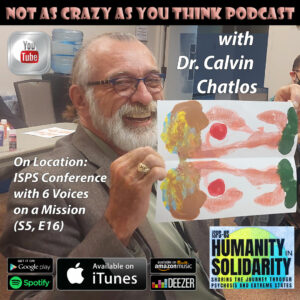
Dr. Calvin Chatlos is professor of psychiatry at Rutgers Robert Wood Johnson Medical School in New Jersey, with certification in adult, child and adolescent, and addiction psychiatry. Dr. Chatlos has presented at national and international conferences and is a distinguished life fellow of the American Psychiatric Association and a distinguished fellow of the American Academy of Child and Adolescent Psychiatry.
Jen
Okay, so we are now sitting with Dr. Calvin Chatlos, and you had a really interesting presentation. You were on a panel with People of Lived Experience Exploring the Impact of Having Spiritual Emergency Pathologized. Why don’t you tell us a little bit about what you have to offer in terms of the interpretation of spiritual emergency?
Dr. Chatlos
Well, thank you for the opportunity to be here. I’m an addiction and child and adolescent psychiatrist. And in working with addiction, we get into the realm of understanding or at least looking at or exploring the nature of spiritual experience through 12 Step Alcoholics Anonymous programs. And so that’s part of what has been directing my life. And in looking at spiritual experience, what we’ve found is that there’s a framework of spirituality, and we’re beginning to understand how spiritual experience is organized within our own minds. There seems to be a key to specific experiences of self-worth that we’ve defined as self-confidence, self-esteem, and self-competence and dignity, that we look at as, how do we make choices with reason? How do we have or how do we strengthen empathy and compassion, and how do we live with courage beginning with honesty with ourself and others? And when these experiences are empowered, something happens. Something within a person starts to open up. And this is what we’re looking at with the spiritual experience. Now, the reason I get to this conference is a little different. In our panel, I’m someone that’s had psychosis experiences and spiritual experiences, and because of the system I’m in as a mental health professional, I’ve had assistance and have not had to be hospitalized. So as I’ve gone through various crises, spiritual emergencies, I’ve always had someone that I could go to that would just sort of show up and be able to help me understand it, help me integrate it. And I’ve avoided the problems that many people with both spiritual experiences and psychotic experiences end up getting caught up in the mental health system.
Jen
As a psychiatrist, you know what those problems are, and you were able to look ahead and say, I’m going to avoid that because I know that I could be in a vulnerable state as well.
Dr. Chatlos
Yes. And the vulnerable state didn’t look so good. I did my psychiatric training at Bellevue Psychiatric Hospital. And during my residency training, one of those psychotic experiences happened, and I said, oh, no, please, I do not want to go to Bellevue Psychiatric Hospital.
Jen
Now, did that open up a new path for you? Because you said, wait, if I’m avoiding it, how can I intentionally put people there if I know that the system is lacking?
Dr. Chatlos
Yeah. That experience probably was more of, you know, when you just have a non-ordinary experience that seems a little on the crazy side. I happen to work with a psychoanalyst that helped me understand it. But it taught me that, you know, there’s something in experience that I don’t know about. And it made me realize that I’ve been living my life, but there’s a lot more there that I need to take a second look at.
Jen
Wow.
Dr. Chatlos
And as time went on, the more I got into mental health as a practitioner, as a psychiatrist, I would see the things that were happening. I would see the abuses, I would see the misdiagnoses, I would see the misinterpretations. I would see the missed connections between mental health professionals and patients.
Jen
Right.
Dr. Chatlos
And that has been the other part that has sort of drawn me to this conference. This organization, ISPS, and this conference is sort of new to me. When I work in addiction, I don’t work much with psychosis and schizophrenia, because people with schizophrenia and real psychosis that have substance abuse problems end up in the mental health system, they don’t end up in front of me. But just in the last six months or so I’ve come in contact with some of these people, and I’ve listened to their stories. And they’ve challenged my 40 years of training in psychiatry and understanding of schizophrenia and psychosis.
It looks like, as human beings, we have wired into us some sort of functional mechanism that we refer to as a spiritual core. And for the most part, and in most people, it’s out of awareness. Until we sort of do things like meditation, or mindfulness or yoga, and it seems to clear up all the noise that’s in our brain and all the distractions and something opens up. And when it opens, you’ll often hear the term mystical or numinous with the word spiritual. That’s not like magic. But there are certain characteristics that happen that are unusual or not ordinary, when spirituality opens up. You feel this grand connection with people, with yourself, with your history, with the world. You feel whole, you feel the energy is amazing. You get a sense of serenity or peace. And when we work with it, on and on, there becomes a meaning. There really does become a sort of a very deep, inner—to use the word soul, people have all kinds of misinterpretations. But for me, soul is the deepest part of human experience. And there’s a soul purpose that we sort of have wired into us.
Jen
Now you’re speaking really in a new language. This isn’t psychiatric language. We both know that there is a whole absence of this topic in the field, which is kind of strange, right? Because you would think that things having to do with the psyche or soul, would be integrated in the system as is, but it’s not because of the biomedical model. So can you speak to that a little bit, how you’re trying to approach your field with a new framework to include these ideas?
Dr. Chatlos
Yeah, one of the things that’s fascinating– Sigmund Freud, when he developed psychoanalytic thinking, he was German. And in the German language, the word psyche is very different than the way it got interpreted into English. And there’s a book by Bruno Bettelheim, Freud and Man’s Soul, who describes how that misinterpretation of Freudian psychoanalysis, mechanized psychoanalysis in the English language and in America, and basically in the Western world. So to a large degree, Freud was about exploring that psyche, even though he had a thing about religion. And spirituality wasn’t really a focus at that time. But a large part of why I’m at this conference is, it is very clear that the psychiatric profession needs to change and transform the biomedical, bio-psychosocial model. Where is spirituality? And it not only should be just tacked on as, well, maybe this is a little piece. My goal and what I see in my work is I think spirituality has to become, in some way a central part of the entire biomedical psychiatric model. Because our experience, and I’ve been in this field doing this work for over 45 years, the spiritual part when it opens, looks like it is the source of healing, of emotional trauma, of emotional problems, of many aspects of mental illness or mental disorders. And in my experience, it’s the source of healing and human happiness. Outside of whatever we achieve in the external world, there’s a central core of happiness that we can attain, or that we can connect with, that everyone can have. You don’t have to have money. You don’t have to have circumstances. But you just have to be willing to look at who you are, and learn to accept yourself and accept others.
Jen
Well, listen, you are on this very unique path. And I’m very grateful to you because I have come across plenty of psychiatrists in my personal experience with mental health.
Dr. Chatlos
And I’m sure they’ve been great for you. (erupting in laughter)
Jen
(Laughter) As you hear us laughing, that’s the sentiment there. But you know, I stuck it out with certain ones because I felt that there was an element of compassion there. But then when my spiritual emergencies occurred, there was always a misinterpretation. And so we need more people like you out there. And I’m very grateful that your voice is being heard in conferences like this because we need people from the inside to do this work. You know, we can only do so much from the outside, but on the inside is where it’s happening.
Dr. Chatlos
And let me say, one of the things that I think I’ve said several times at this conference to people: American psychiatry and mental health, Western civilization mental health services are probably never going to accept some of the knowledge and the truth of the Eastern religious and spiritual traditions, which have an awful lot of knowledge for thousands of years. What I’m trying to develop is a Western language that will get us to the same place. And so we’re working with a framework, beginning with Western science-based cognitive behavior therapy. And by using that in an expanded form, we get to explore spiritual experience. And I’m hoping that it’s a model that Western psychiatry can sort of say, hey, maybe there’s a way for us to get in. But we’re sort of, you know, we always are the best, and our way is what’s right. Well, we need to get some of the knowledge of the Eastern traditions.
Jen
To make sure that this is incorporated in some way where it could stand and actually deliver the right information for the professionals, that’s what is the ideal situation. I mean, ultimately, we want to help people, right?
Dr. Chatlos
Well, I love your perspective. (laughter)
Jen
Well, thank you, Dr. Chatlos. I’m so happy that you were able to join the show and talk a little bit about your experience.
Dr. Chatlos
Thank you for the opportunity.
Part 3: Sean Blackwell
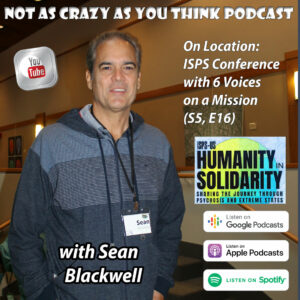
Since 2007, Sean Blackwell has been researching and teaching about the spiritual dimension and healing potential of bipolar disorder through his YouTube channel, bipolarORwaking UP? His book, “Am I Bipolar, or Waking Up?,” published in 2011, describes his own bipolar awakening, subsequent hospitalization, and complete recovery in 1996. In 2013, Sean started The Bipolar Awakenings Healing Retreat, a pioneering program for people who wanted to heal from their so-called incurable condition. In September 2016, Sean received his certification as a Holotropic breathwork facilitator with Grof Transpersonal Training, the official training program of Dr. Stanislav Grof. Sean’s YouTube channel is now called Bipolar Awakenings, and his website is bipolarawakenings.com.
Jen
Sean, thank you so much for joining us. We’re sitting right now with Sean Blackwell. I came across your work when I was looking to come out of the systemic point of view of what psychosis was for a bipolar personality. You were on YouTube, and you were one of the only ones that was really piecing together, the bipolar experience with spirituality. You were part of this panel as well: A Panel of Lived Experienced Experts Exploring the Impact of Having Spiritual Emergency Pathologized. Can you speak a little bit about what you put forward to the audience? And how was it received?
Blackwell
Well, the first part of the presentation is they wanted to know a little bit about my story, which is that I had a very spiritual type psychosis in 1996. I was about 30 years old. And I was at an intensive self-help seminar, Landmark Forum, and they had this meditation… you got a smile, like, you know what happens over there, right?
Jen
Yes, I’ve been to one of those. (laughter)
Blackwell
Ok, yeah. But honestly, it wasn’t so intense, but it was 150 people, and they just asked us to focus on our fear during a meditation. And I thought I didn’t really feel fear. And then when I went into the meditation, I just felt this punch of my heart. And all this energy, and this feeling of fear came up related to a scuba diving accident I had had two months before. And then once that happened, I went into another space, okay? And things got really interesting, we might say. And my odyssey kind of ended four or five days later, at the end of the forum, when I was arrested and taken to the psychiatric hospital. But I felt more whole, I kind of felt amazing, right? I just felt like there was a piece of me that had been missing before that now was much more complete. And so I was sure I had a spiritual experience. I thought when I got to the hospital, I just thought they were idiots, they didn’t know what they were dealing with. And I was fortunate that my parents didn’t really trust the psychiatrists either. And I went home after only four days, okay? So that’s pretty rare for people to be in that situation. And sure enough, I got a little bit of support from a family friend, or friend of my ex-girlfriend’s family, actually a past life therapist from India. She gave me a little bit of support, but just sort of in a validating way that this wasn’t a quote-unquote, psychosis. It was like a spiritual breakthrough. And then a year later, I found the work of Stan Grof, Dr. Stanislav Grof, who coined this term spiritual emergency, which was like a particular non-ordinary state, that if you’re supported, you can be able to work through it, and it can be like a spiritual breakthrough. And I at that time, I was like, well, that’s exactly it. This is what happened to me. It was spiritual. And my life got a lot better afterwards. My salary tripled over the next three years. And I bring that up, because even for my family and friends, mostly my family though, it’s like the only criteria for them to know you’re actually really doing better is if you’re making more money.
Jen
Yeah…That’s how we measure things.
Blackwell
That’s the only thing that counts. Yeah, it’s like, well, your salary keeps going up, so I guess he’s doing okay.
Jen
Right.
Blackwell
But then, I eventually got out of my career in advertising because it just didn’t seem to serve me. And I met a woman from Brazil. And we got married and I moved to Brazil, and I became an English teacher. And I just felt like I had found some freedom, it was really great. But my wife felt like something was missing. But we spent some years being English teachers, and then her nieces, two sisters, had their first sort of breaks with reality in the same summer four months apart.
Jen
Wow.
Blackwell
Yeah. And when it happened to the first one, I was like, this looks a lot like what happened to me. And I was kind of curious. And then I heard them talking bipolar disorder, the psychiatrists said. And I’m like, really? Because it looks like what happened to me. And then I started studying. And I found the work of R. D. Laing, Loren Mosher, Dr. John Weir Perry, and the whole peer support thing. I found Mad In America, I found Robert Whitaker and all these guys. And I got myself ready so that if she had another psychosis, or if she wanted to go off the psych meds, that I could support her through that using the Soteria method—being with her as opposed to doing something to her, you know, this idea. Just as I was getting prepared to talk to her parents about the possibility of supporting her through psychosis, her sister went into psychosis. And she came to us first, and we were able to support her right through.
Jen
Wow.
Blackwell
And then, it got a little complicated, but we supported her right through the first one, but had to get her back to her family. And then she had a second one, which was not supported, and she got medicated. But then her mother came to us expressing her concerns. And I said, well, she’s agreed to be on meds for two weeks. Once you take her off those meds, she’s gonna have another episode within two weeks, so call us when it happens. And just like clockwork, two weeks later, she goes through another episode. We supported her through it. And then she returned to university unmedicated, finished top of her class and went on to have an amazing job.
Jen
Wow.
Blackwell
Yeah. Now, that really got me on the road to this work. And in full disclosure, after seven years, she started to have episodes again. But she did have those seven years unmedicated and really living her full life. But that experience with my nieces got me kind of fired up. And I was on YouTube sharing my story, and saying, What’s the difference between what happened to me in this thing called bipolar disorder? Am I bipolar or waking up? And that started a legacy and a life mission. But then after about five years, it was like, I didn’t realize I was gonna be the only one really unloading on this topic.
Jen
Because we know that in order for people to be given an alternative, they have to have people in the field in some capacity, that’s showing them the way, which you were able to do.
Blackwell
Yeah. And my work was quite different. For example, I noticed there was a big difference between what I was saying, and the peer support movement focused on fighting for psych rights, which is certainly a valid topic. But it wasn’t where I was going. I was like, I want to heal this thing. And that legacy comes from this doctor, Dr. Stanislav Grof. And my work online really became about going into this gray area. And even among transpersonal psychologists, they kind of thought that the spiritual emergency, which was like this breakthrough experience, which is what I saw myself as having, was one thing and mental illness was another. And then it was through the experience with my nieces that I was like, whoa, there’s a lot of gray area here. And I started to talk to people online and found out that actually, almost everybody with bipolar 1 diagnosis has what seems to be spiritual experiences, potentials for spiritual breakthroughs. But then they also have some other difficulties, and usually are more traumatized than I was. And so I spent the next few years creating a model actually, about the difference between spiritual emergency, bipolar 1 and schizophrenia. And that’s what I presented in the presentation there.
Jen
That’s great.
Blackwell
And I think it has a lot of potential to help a lot of people.
Jen
Absolutely. And one of the things that you talk about in some of your YouTube series is this idea of this loss of ego that happens.
Blackwell
Yeah- ego collapse….In Buddhism, they’ve got this concept that the ego is our false self. It’s this image of ourselves that we think we are, but it’s not really who we are. And what I noticed when people go into “acute psychosis,” is they have this ego collapse, right? And so how does an ego collapse come around? It takes the part of you, it takes your identity, and it just rattles it. So an imaginary example I give in my very first video was of a student named Bill, who sees himself as a really good student. But then he goes to university and it’s really not fitting with him, his grades aren’t so good. Then his father dies, he falls into a depression, his girlfriend breaks up with him. And then he doesn’t know who he is anymore. And he changes schools, and he ends up on the west coast and ends up in a completely different surrounding environment. He’s surrounded by New Age people instead of his traditional religion. And everything in him starts to feel a little strange, a little lost, like he’s not quite touching the ground, and then boom, it just all breaks down. And then when you have that ego collapse of all these parts of your identity, sort of disintegrating and what we call trigger events, okay? You got so many triggers, and then boom, it collapses. One of the things that happens is your senses get sharper, or you see more detail in curtains that you’ve never seen before. You smell scents that you haven’t smelled before. And that was my experience when I went into psychosis. There can be also a sense of all knowingness or a sense of completion and a oneness with everything as well. You lose the boundary between yourself and others, right? And these characteristics are all mentioned in Buddhist text and things related to enlightenment and Samadhi, and things like this. And they happen to people who are in acute psychosis too. If it’s blissful, like a blissful psychosis I would call it, which is what tends to get characterized as bipolar 1, and that was a big part of my experience—but then there’s this other part. With that experience happened to me, I was pretty sure that I was dead, right? And I was going to heaven, and I was being tested by God to go to heaven. And so the first thing was I needed to let go of everything, which brought about the great cosmic pee. Which is, when you’re letting go of everything, the first thing to let go is your bladder.
Jen
The real pee. (laughter)
Blackwell
Yeah, yeah. And I peed on the carpet in this hotel ballroom where the conference was taking place. I was in an empty ballroom peeing on the carpet. I got to test my fears, I laid down in it, and then the security guards came. They found me, and they wanted me to put my shirt back on, but instead I took my pants off. So I’m just in my underwear. And then the police come. And even though they were tough on me—they handcuffed me to a stretcher and took me away— I still thought they were taking me to heaven. I was in the stretcher thinking this is the craziest way to go to heaven that I ever imagined. And what happened was I thought I died in the scuba diving accident. So there was this whole thing there. And so during my presentation, I was challenging the audience. What’s a spiritual breakthrough here and what’s psychosis? Because all of this was part of my spiritual emergency, right? But a lot of it just looks batshit crazy.
Jen
Well, I love how you apply this alternative meaning to this, this sense of relieving yourself is like a sense of liberation and also uninhibitedness that comes through in a lot of these experiences. And yet, you dignify it, because these things do happen. And when you are just looking at these behaviors and reducing them to categories in the DSM that can be found, it becomes so pathologized. But you kind of ennoble it, so that we all can relate like, yeah, there must be some other experience going on beneath what the behavior is showing. A lot of the times in psychiatry, that’s all they’re looking at.
Blackwell
Yeah, they’re just looking at crazy, and then they block it and everything. But in following the work of Stan Grof, but also Loren Mosher and others, there’s symbolic meaning behind a lot of this stuff. And so, from my Grof transpersonal training, my orientation when people are in extreme states is, don’t worry too much unless you’re seeing immediate risk of violence or danger. And that’s not just people talking about things. But if they’re really looking like they’re gonna jump out a window, or if they’re hitting themselves, you know, you have to stop the violence. Because that means that they’re just projecting their fears and their anger. You have to have people internalizing what they’re going through. If people have capacity to internalize their process, recognize that something is going on within them, there’s a potential for healing.
Jen
Right, right. I know that there are a lot of people here with lived experience, they’re looking for answers. And they’ve also been very traumatized by the system. It sounds though, Sean, that you weren’t as highly traumatized as many others, because you were able to put meaning behind it right away. And you also had family that was somewhat supportive.
Blackwell
It’s true. And I wasn’t as highly traumatized, I think, as most people in their lives. I had quite a blessed childhood, you might say, two parents that loved each other and loved me. That’s a good start. They weren’t perfect, but it was a good start. And then even my hospitalization, it was only four days. But when I did get back into the work, the memories of forced injection, they did come to the surface. And one of my first videos I made for YouTube, I called Rage Against Psychiatry. And it was done to the music of Rage Against the Machine. And it was just like a three minute heart attack. It was really angry, you know, and I think I ended the video by saying, “find your spirit”….It makes me emotional when I think about it…. “Find your spirit, lose your meds.” Now, the unfortunate part is that a lot of people just took from that lose your meds. And my work is more about find your spirit.
Jen
Right, right. The healing process.
Blackwell
Yeah, you got to heal first, then you can lose your meds. But at this point, I would say most people just have no idea what even healing looks like or feels like, no idea. As a society, we don’t know. It’s a very fringe group of people who are really deep into that understanding.
Jen
Well, you’re definitely in that group that is maybe a very small niche, but you’ve definitely offered a great deal of guidance I know to many people, and I thank you for what you’ve done. Thank you so much, Sean, for giving us a little bit of your time. Thank you.
Blackwell
You’re welcome. Thanks, Jen.
Part 4: Oryx Cohen

Oryx Cohen is the Chief Executive Officer of the National Empowerment Center. He serves as president of the board for the Massachusetts Transformation Center and We R H. O. P. E., and is a master Emotional CPR trainer. Oryx co-produced and is a subject in the award-winning social action documentary Healing Voices, which was released in April 2016. You can follow his message on Instagram @ NEC_Empowers and on Tik Tok @ NECempowers.
Jen
Okay, so we now have with us Oryx Cohen. You have put out an amazing movie that you co-produced, called Healing Voices, a wonderful film. Today at the conference, you’ll be talking about Neurodiversity Gifts: Collective Unconscious Inkblot Art. Tell us a little bit about your past experience that led you to be able to be an expert on this panel about Neurodiversity Gifts.
Cohen
Well, it’s my own lived experience that has led me to all this, including the film. So I’ve had experiences of extreme states, I like to call it unguided vision quest, that I’ve been able to integrate into my life and have actually helped me as a person grow and become the person that I am today. So that’s what kind of guides all my work. And this Neurodiversity Gifts is a brand new training that we’re releasing at this conference. It’s a different way of looking at our experience, rather than being a deficit, a pathology, something to fix, that we are all different and those of us that are maybe a little bit more sensitive or have had these altered experiences actually have something to give to the rest of the world, and we should be listened to. So that’s really kind of the framework of Neurodiversity Gifts. Going from pathology to strength.
Jen
Neurodiverse right now is one of those buzzwords in the field, right? And people come at it from different perspectives like, there’s the, not neuro-normal but
Cohen
Neurotypical, neuroatypical and all that.
Jen
Thank you, yes. So do you subscribe to that perspective? Or is everybody neurodiverse?
Cohen
We’re familiar with all the arguments and the movement, and the language debates over neurotypical, neuroatypical, neurodivergent, neurodiverse. We’ve purposely chosen to use neurodiversity language because we feel that’s more inclusive of everyone. And it’s a little more positive, I guess. So I view myself as neurodiverse because I feel like I am a part of the human family, not someone or something totally different or outside of the rest of humanity. So I totally understand and get the argument of, well, I don’t want to be treated like everyone else because my experience is different, and I need to have certain accommodations, or I need to be valued for my particular experience. So I hear that perspective, as well. But we’ve chosen kind of purposefully to go with neurodiversity language, for the reasons that I said.
Jen
Well, I think it’s important whenever you’re trying to change a paradigm, changing the language is where it begins, right? I mean, what’s been forced upon most of us is this medicalization of everything. And you certainly have done a great job of breaking free of that. I know a lot of your work was also with Will Hall?
Cohen
Yeah.
Jen
And I know that there’s such a peer respite community in Massachusetts, unlike in other areas of the country. Truly, it seems as though that’s the center of where so much alternative thinking around this topic is. Can you speak to that a little bit?
Cohen
Yeah, I met Will in 2000. And in that year we started an organization called the Freedom Center in Northampton, Massachusetts. No government funding, just a bunch of us psychiatric survivors meeting regularly. And it really took off, we’re all volunteers basically. And we had a lot of success in terms of people coming to our groups, and we offered a free acupuncture clinic to the whole community. So we’re giving back to the rest of the community, and we’re doing large events. Bob Whittaker was one of our first speakers way back then when he was just getting started on his work. And we traveled internationally, we got in big articles and mainstream media, all kinds of different stuff, just from this little organization. And then that led to, alongside the statewide organization, which at that point was called Empower, we were able to get funding for actually peer run work in Massachusetts. So now there’s these recovery learning communities. The first one was the Western Mass Recovery Learning Community, I ended up being one of the first co directors of that, with Sera Davidow. And they’re still going strong, they’ve changed their name to the Wildflower Alliance.
Jen
Okay, that’s Wildflower Alliance, yeah.
Cohen
That’s kind of the history of that. And, yeah, so there’s a long history of great work being done in Massachusetts.
Jen
So if that’s the case, that all this movement behind this alternative approach which is, you know, peer-led healing really, is alive and strong in Massachusetts, but there are so many other states that haven’t really hopped on board, if you were to give advice as to how communities elsewhere would do this, what would be stage one?
Cohen
Yeah, well I will say the landscape right now is a lot different than when we started things in Massachusetts. This was before peer specialists really started to take off. So now we have a problem within our movement of being co-opted. So in every state, there’s definitely things going on, there’s peer work going on. But a lot of it is not volunteers. It’s not independent movement. It’s funded by the government. So there’s a lot of folks feel like what’s happening in the quote-unquote, peer movement, is watered down, and not really getting back to our roots. So my recommendation would be to get back to our roots of, yes, peer support and connection is super important, and a human rights perspective. So this is a human rights movement. This is a political movement.
Jen
Right.
Cohen
And a lot of folks don’t understand that. So I think that’s probably the missing link right now.
Jen
So do you feel like the answer moving forward is really to, I mean, this is the issue here, how do we move forward in change? Is it getting inside that system and exploding it from within? Or is it creating outside systems for alternatives?
Cohen
I think it’s both. I think we have to do everything.
Jen
Yeah.
Cohen
So I’m actually a big proponent of media. I think media is the biggest way to make change. And so like podcasts that you’re doing, for example, are really important. Film. Things that get out beyond the choir to the public because the mental health system is not going to change on its own. It’s going to take the average person to realize what’s going on and say, hey, I want something different for my family, my community. And so how do we get there? They have to be educated, and so, media. Media is the biggest.
Jen
Is that what really put a lot of fuel behind your quest to get your own story out there through Healing Voices?
Cohen
Yeah, definitely that was the biggest motivation. Seeing how what we were doing with Freedom Center was working in a very small community in the Northampton area, the impact that we were having, but still not really anybody knowing about this alternative way of looking at mental health, the average person having no idea. So how do you get the word out is a movie. And I am happy to say at this point Healing Voices is now on Amazon Prime. It’s been seen by millions of people.
Jen
That’s so great.
Cohen
Yes, it is. It is great. So we achieved that goal of getting beyond the choir, and people are getting that alternative perspective.
Jen
It absolutely is the way I think. In order to hit as many people as possible you really do need to plug in to what they’re absorbing because they’re gonna hit that quite possibly before they go and listen to the doctors. Because that’s what they can consume on their own time and find it in their own way.
Cohen
YouTube, TikTok, Insta, all that.
Jen
All right, well, thank you so much for giving us a little bit of your time and sharing your perspective and your input into this community movement. I’m so thrilled to be able to sit with you.
Cohen
Well, thank you for having me.
Part 5: Joshua Roberts

South African Joshua Roberts combines his lived experience, which includes diagnosis of bipolar 1 and six 5150’s with his Bachelors of Psychology and Masters in Theology to create a synergy between the inner and outer worlds. He’s the COO of Inspired Mind Mental Health and works with NAMI and the National Empowerment Center.
Jen
Okay, so right now we have the wonderful and dynamic Joshua Roberts sitting with us, who’s going to be presenting with Oryx Cohen the talk, Neurodiversity Gifts, Collective Unconscious Inkblot Art. It’s an in-person only event. Are you going to be doing any ink blot art in the presentation?
Roberts
Most definitely. Oryx and I spoke about that, we’re gonna do our own ink blot art, but I’m pretty much always doing ink blot art. Reality is kind of an ink blot art test, it’s a projection of our own psyche. We don’t see the world as it is, we see the world as we are.
Jen
I love it. I love it. So alright, tell me a little bit about what you are going to be discussing in this Neurodiversity Gifts. We were talking about it, Oryx and I, about how there’s this new language out there that we want to start incorporating into the mainstream. So what is it that you are going to put forward?
Roberts
So in the 1990s, Judy Singer coined the term neurodiversity. I think it’s a really good bridge from the biomedical model to a higher dimensional model, a dimension of the creativity you explore, the spirituality. So neurodiversity means to appreciate being wired slightly differently, that the intelligence that set up this whole cosmos made us different for a reason. We’ve got a purpose, and that we’ve got a unique gifting that we can learn to unpack if we connect with like minds– and get these different kinds of perspectives. So we’re going to be unpacking that quick. This is kind of an experiential workshop. So we’re only going to be talking for about 20 minutes. And then we’re going to actually do the metaphorical ink blot art so people can get a taste for not only how they can interpret things through their own lenses, but they’re going to be sitting at round tables, so they will have a chance to share their art with others. And others can interpret into their art what they see as well. You know, in conventional psychiatry, they interpret our interpretations of Rorschach Blots and inkblot tests to say if we’ve got a problem. But in the peer movement, we’re the experts in our own experience. And so I think through the power of community, through Ubuntu, I’m from South Africa originally, and Ubuntu means I am who I am through other people. By having a roundtable discussion about our psyche, what’s within us, we can see some fresh new color and perspective.
Jen
You know, you have this very spiritual approach to this language. In the psychiatric field, they are always pathologizing everything, but you’re bringing the same concepts to a different meaning framework. And that’s so important right now to move forward in changing the paradigm. So how do you see your spiritual connection in all of this? I know that you are very influenced by some Eastern philosophies as well?
Roberts
I am–a fusion of the East and the West. So I think we kind of go on the hero’s journey within our own lives, starting in a certain world, leaving that world and then coming back to it from a fresh informed perspective. The same terrain that the caterpillar crawled on is now seen from vibrant new heights. And so I started off in the Christian faith and the Catholic faith. I kind of left that, I didn’t know how real it all was, although I would always pray to Jesus when I heard that there were sharks in the water. But I experienced Jesus in my bipolar experience, when I saw that the spiritual world is not some other world, it’s a dimension of this reality. So I rediscovered my original faith now incorporating some of these other ancient wisdoms from the east and from kind of traditional shamanism and that sort of stuff. From just the world of the mind into this dynamic form of spirituality, which is my everyday reality. The Hebrews didn’t have a dividing word, they didn’t have a word spiritual, because they didn’t see spiritual and secular. There was no dividing line, everything is spiritual.
Jen
Right. Do you feel that some of our Western culture has made it so dualistic that it’s just really hard for people to integrate these days?
Roberts
That’s one of the main issues, I think, in the West is dualism. I think it’s handy because that’s basically the left-brain categorical thinking. There’s such a thing as up because there’s such a thing as down. These dichotomies, they’ve helped us advance in science, but then that also comes with there’s such a thing as self, there’s such a thing as other. There’s such a thing as sane, there’s such a thing as insane. And I think more of a spectrum and non-dual understanding can provide the necessary component that the West has been missing through their ironically-called enlightenment. I think the pendulum swung really far towards left-brain kind of linear rational thinking. And now it can find some balance between the left and the right-brain holistic thinking. I think it’s the dawn of something new, and I’m excited. It’s so cool to be a part of it.
Jen
I know it really is wild because especially being here with all like-minds, who are really on the cutting edge, it seems as though there’s some kind of revolution that’s been taking place, I would say unfolding since–I like to use COVID as the milestone. Somehow I feel so many lived experience people came together because we were able to kind of meet secretly online, right? And then it was like, oh, we can open up, and wait, there’s more than just one of us. This is a shared collective story right now.
Roberts
It is. I think that’s a microcosmic picture of the macrocosm in where the world seems to be shutting down. Everything seems to be a disaster. That’s the birth of something new. The caterpillar has to dissolve its molecular structure to re-emerge as the butterfly. And I think when the old world faded away, those of us, who are really kind of on the periphery of the new, were able to welcome the world into the new. Some of us have been living in this different reality for quite some time now. We pulled up a chair for everyone, and we got a cup of tea ready to welcome the world into this thing that’s larger than us.
Jen
Exactly. Can you tell us a little bit about your own lived experience? Did you personally go through psychosis or what they call psychosis? I call it shamanic dismemberment. That was what it was for me again and again.
Roberts
So yeah, my first two episodes of so-called psychosis, there’s different ways of understanding that term. There’s an etymology that says it’s a life-giving animating force that comes from the ancient Greek. And that’s what it was for me. And my first two psychoses were guided by my brother the first time and my friend, who comes from the Khoisan Bushmen in South Africa, so that I didn’t need to be hospitalized. I came out of the first one in an hour, and the second one in about four hours. But the first time it happened while I was by myself in America, well I thought I was the next version of Jesus Christ, and this was all a lucid dream. And so, law enforcement didn’t like the show that I decided to put on, so they promptly arrested me. And that led to the cycle of getting a criminal record. So then the people with disabilities that I was being paid to look after, were taken from my home. And over the next coming season, I was hospitalized six times against my will, I was arrested twice, I blew $86,000. But in the mess, I discovered, in hindsight, that it was a metamorphosis. It was a letting go of the old way of being, and an embracing of something new. And so just to anyone who’s going through it right now, just know that there’s something deeper emerging below the surface. The seed seems to be doing nothing, but really this new organism, the sprout is sprouting up. It might not reach mutual consensus reality right away. But there’s a process, there’s an evolution, there’s an intelligence that can emerge through it. And so that’s what it’s been for me. And it’s an ongoing journey. And to connect with like-minds like this at the conference, and to really, be in America, and to be living in California, where it’s such a forefront of cultural creation, just feels like a privilege and an opportunity. I can’t believe that I get to live this life. It’s living the dream, I tell you literally.
Jen
You are such an inspiration. I mean, most people who go through these things, they go through such traumatic unfolding of really working through the pain that the system has inflicted upon them. But it seems like you’re an example of someone who can take this experience, turn it inside out, and the meaning that you give it brings this new awakening for yourself. I mean, what is your advice for those people who are losing hope because they can’t see what you see?
Roberts
Yeah, and I was one of those people. So you know, hindsight is 20/20. I can see this stuff in retrospect. The rearview mirror is nice and clear, but the windscreen is so blurry. And so I had seven months of debilitating clinical depression, where it just seemed like there was no hope for the future. And so I know what it feels like, and there’s something larger at work. And if we do kind of lean into that process, I believe that everything’s a vehicle of communication. Our depression is trying to tell us something, our mania is trying to tell us something if we listen to the soul. I was living in LA at the time when I was having this depression. And so I realized I’m a surfer. And I was feeling like a fish out of water, I needed to leave LA and I needed to go back to San Diego. As of doing that, getting involved with NAMI, I work for the National Alliance on Mental Illness, and working in the field where my bipolar is the reason I got the job, I can completely be myself. So I changed my whole lifestyle. And I know that’s not available to everyone. I’m just saying, the process for me was that I wasn’t living a congruent lifestyle with who I was being called to be. And it’s a process that emerges, but I’ve seen it time and time again with hundreds of peers, thousands of peers that I’ve worked with in San Diego County. There’s an intelligence behind these things. And if we can lean into that a little bit, especially through the power of community and the power of sharing stories like you do on your podcast, I think this metamorphosis can be greater than we can possibly imagine at the time.
Jen
Yeah, absolutely. Let me ask you, if you don’t mind, were you ever heavily medicated?
Roberts
Yes. And that seems to be the default mode when you go into psychiatric hospitals. I think they want to overmedicate on the antipsychotics because people when they’re depressed are less of a liability. So I was very heavily medicated on antipsychotics, hated it, couldn’t read my textbooks, dropped all my classes in seminary. And then I got off them too quickly, too. And that’s what sent me into my debilitating depression. So these things are no joke. I think there can be a use for medication. Absolutely. I really like the quote by Dr. Joseph Campbell, the famous Comparative Religion Professor and mythologist, who says the person in psychosis is drowning in the same water in which the mystic swims with the light. And I think meds can help you to get good water wings that can allow you to float and catch your breath and kind of chill at the top for a little bit. But they can also be restrictive. It’s hard to do synchronized swimming and do some stylish maneuvers in these water wings. So the meds kind of helped me at some point stay grounded. I thought I could fly, you don’t want to put that to the test too much. But then I think there comes a season where getting on the lowest effective dose of medication can really help you to have one foot in this world, and one foot in that other dimension where you can bring the inspiration from that dimension into this world.
Jen
Yeah absolutely. It’s so simple when you put it in that language to really conceptualize this. And, unfortunately, it’s the psychiatric, again, pathologization that they bring to the forefront that confuses everybody. It kind of disconnects us from our own purpose and soul. What are you coming away with, ultimately, from this conference?
Roberts
I’m coming away with there’s this commonality. It feels like everyone gets it because you’ve seen it. It’s kind of hard to learn these things from textbooks. But being in a physical space with people who’ve gone through it and connecting with others in the mental health field. I mean, my connection with Oryx has been game changing for me, there’s such a synergy. And it’s a kind of a small world. I think within the general population, they say there’s six degrees of separation. Within our little circles, it seems like there’s one or two degrees of separation. And with that synergy, you tap into something that’s larger than the sum of your parts. You’ve been guided along by this benevolent guiding force that unfolds pathways in front of you. And all you have to do is take the next step. That’s another quote by Joseph Campbell, he said, “When you’re on the right path, you’ll find that invisible hands are guiding you.” So you kind of can relax into it. You don’t have to do it all yourself. I was taught climb the ladders, get the grades, study. Yes. And you can relax. It’s kind of got your back. And so through a community like this, we don’t have to stand alone. I liked in the keynote this morning, it was about the power of networking. Let that net work for you. There’s a real kind of support and embrace. So that’s what I found here. What about you?
Jen
I find the same thing. And I also feel the mainstream language is really just wrapped up with the system. So when you’re here and you’re using alternate language, I feel very empowered that we could all kind of move forward. And because we’ve supported each other and bolstered each other’s confidence and language system, we can now continue our work and go out there and affect even more people. And that’s why these things are important.
Roberts
Yeah, they are. It’s like almost walking through the desert, then you come across an oasis and you drink your fill, and now you’re nice and saturated, and you can go a few more miles. And I think it’s important to find these kinds of communities within our local population too, and I think they’re there. If we could set up these little pockets of community everywhere, I think that net could expand, and I think we could ride that net. It’s kind of like the Spider Man net. It takes you to all new places, but you do have to let go of the old web. The old web would actually lead you backwards if you clung to that thing. You got to let go of that old net–and I’m not saying let go of people, I’m saying of the old way of thinking of things–and grab on to this new network, this new thing that’s pulling us forward into the future. And it’s got a gravity and a thrill. You get that feeling in the bottom of your stomach. And it’s a ride I tell you, it’s an adventure.
Jen
Yeah, absolutely. Well, this adventure has just begun.
Roberts
You know it.
Jen
And I’m so thrilled to be a part of this community. And I thank you, Josh, for giving your time and your really true words of wisdom.
Roberts
Jen, this has been a blast. I feel energized coming out of it.
Part 6: Mija Bradford

Mija Bradford is a clinical therapist working in private practice since she graduated from Northwestern University Counseling Program in 2021. She has her MBA, and before her studies in counseling, retired after a 27 year career in the financial industry. At six, Mija was introduced to the subtler energies in life and answered the healer’s calling. Mija comes from a lineage of African diaspora healers that have suffered from collective generational trauma. She has been the victim and has witnessed individuals that the counseling industry has misdiagnosed, mislabeled, and sustained through treatment plans and medication that do not take the clients’ ancestorial culture in perspective, due to the lack of decolonized views and theories practiced in the counseling field.
Jen
So we just got out of a wonderful talk from Mija Bradford, and the title was called Decolonizing Mental Health: A Journey of Understanding. Mija, thank you so much for giving me a little of your time to sit.
Bradford
Thank you for inviting me. I appreciate it.
Jen
I was so pulled in by your message because I’ve been in the hearing voices community. I had a trip to India where I had a near-death-experience. I came home, and I felt like I took on that land’s ancestral spirits, you know what I mean?
Bradford
Yes, yes.
Jen
And it was something that nobody around me could understand, neither could I at the time, but I knew what they were telling me about my mind and what was wrong with me was really off-the-charts wrong. But I was so heavily medicated, that I just didn’t know where to go. So what I love about what you are really pushing forward is we need to really detach ourselves from this Eurocentric perspective on everything. That way is the only way is the right way and everything else is either evil or somehow it doesn’t fit into what real human things are, right? So can you tell us a little bit about how you had grown up hearing these ancestral voices and how that led to you being diagnosed with these disorders and medicated yourself?
Bradford
Well, I mean, ever since I was young, I would hear our ancestors. I would just know certain things about people, I would feel certain things. Especially now, we always talk about we’re spiritual beings having a physical experience. But I don’t think we really explore that if I have physical senses, if I have eyes, I have ears, I have a nose to smell, then that means my spiritual body has that too. Anyone has the ability to feel spiritual things and hear spiritual things and smell spiritual things. When you think about energy, energy is fluid until it becomes solid, right? So if our bodies are solid, but we started off from a fluidity, like spirit, that means we just have to lighten ourselves so we can feel that, if that makes sense. And most young kids can do that. That’s why they always talking about my imaginary friend, or we tell them it’s their imaginary friend, but they are so concrete that they have a friend that most adults can’t see. That just kind of kept on for me, until the more and more I got into religion, and people telling me, No, no, you can’t do that, or No, you shouldn’t do that. No, that’s wrong, or that’s evil. Even though, people would see the experience, they would see that I was helping people. Oh my gosh, I would tell people if an ancestor had a message, and I don’t know them. And I would give them a message, and they’d be like, You’re right! How’d you know? It’s not me, you know? I always never take credit for it. I knew that it was divine. I knew that whatever you call it, God or, whatever you call that higher supreme consciousness, it’s just connecting to that.
Jen
Yeah.
Bradford
I worked in the financial industry. And of course, that’s the most logical and very strict that you can kind of think industry, and people were starting to hear about my gifts at work and started to ostracize me, vilify me, to the point that I did have a break. And when I went to the hospital, they seriously medicated me to the point that I was just lethargic. I couldn’t function, couldn’t drive, couldn’t do anything. It was terrible. It’s not until my therapist started to ask me to dive in more into my culture’s, so-called spirituality or religion, that I started to realize, hey, there’s nothing wrong with me, right? It’s really society. But I love this time that we’re in, because more and more people are starting to explore spirituality. People say, Oh, go hug a tree, a tree can help you, right? Well, that’s a spirit there. They’re taking energy as an exchange, they remove the energy from you, and they take it on. And if you would think of the concept of a tree, you know, all trees are connected, right? That energy is connected, they’re connected in their roots. That’s how we are too, we’re all connected. It’s just about taking the time to have empathy and be vulnerable to kind of connect to someone. And these individual silos that were created and told that that’s the way everybody is—individual. But that doesn’t work in a community. And most, especially African cultures, I’m not even gonna say just African, just cultures– back in the days everything was worked on a community, right? Oh, you know how to make that, oh, I know how to make this. Let’s exchange, right? But we don’t do that anymore. We’re so capitalistic. We’re so individualized, that we are not our brother’s keeper anymore. We need to get back to those basics. And that’s how we’re going to help and heal each other.
Jen
Exactly, exactly. Now, all right, so let’s just go into this– I’m curious about this therapist. He seemed to be in touch with this idea that your spiritual background was important. And you are Haitian?
Bradford
Yeah, I’m Haitian. I’m Haitian-American, so my parents came over here in 1960s. They met over here. And when I was younger, I would go back to Haiti, but then when my grandfather died, we didn’t go too much. And all the unrest in the country, which still continues, it’s not easy for you to go back. But my therapist is an immigrant from China. And she went back home to visit her family. And she really never shared with me too much of what happened, but she came back with a different philosophy. She just revamped our treatment plan and started talking from a spiritual perspective. And that’s when the healing started for me.
Jen
Wow.
Bradford
Because I truly believe, you know, we’re spiritual beings having a physical experience. So if you’re going to try to help me with something, you got to start with the Spirit.
Jen
Well, you were really lucky to come across that because you know most of us who are in these therapy programs, we just can’t find our way in that conversation. Especially if you don’t have say, an alternative. I say alternative because you were saying before in your talk, which was really wonderful, about how so many religions are patriarchal. A lot of the major ones are, and all of these more spiritualism traditions are more in the context of this deep energy that’s kind of in your root chakra, right? Like this matriarchal thing that’s coming through. And those seem to be the ones that were suppressed so much, and people were oppressed for practicing them. So it’s wonderful that this experience that you had with your therapist allowed you to finally explore this, because I don’t think many people ever go in that direction because they’re so afraid.
Bradford
They are, they are. As a matter of fact, every religion, if you go down and study it, it will have like a mystical, kind of feminine energy to it. And it’s vilified. You know, they’ll call you witch, they’ll call you evil, they’ll call you bad, because you got to kind of think of it from their perspective as well. And what I mean by their, I’m talking about whoever’s in control, right? It’s kind of hard to control the masses, if everybody knows that they have the divine in them, right? So that’s where this whole patriarchy capitalism control individuality came in. It’s the control, right?
Jen
Yes.
Bradford
And I understand why they did. But it doesn’t serve us anymore. It’s time to look at other things.
Jen
And what you mention is that a lot of people experience this psychosis when there’s this inability to integrate.
Bradford
Correct.
Jen
Like who we are today in this western world with what our roots in our DNA are probably pulling us towards spiritually. So can you speak to that a little?
Bradford
Well, it’s actually not my thought. But it’s this doctor, who basically says from his village, that when a person was having a psychosis, they would be brought to the shaman. And they would have an initiation, and they would actually help them integrate the energies that were coming through, because what we call mental illness was actually celebrated in his village and not just his village, there’s a lot of, you know, communities that are like that. They were celebrated because of this person who’s having a quote-unquote, breakdown, has a message from the Divine from spirit, and it’s for the community. Yeah, but if you don’t have a community to share, if you don’t have a teacher, a guide, a shaman, or someone to help you, you get lost, and then you get labeled, and then you get medicated. And here’s the thing: I don’t know any doctor who will allow their patient to wear a band aid for a long time or to wear a cast for a long time. So when we talk about psychosis, and when we talk about the industry about anything with psychiatry, psychology, that’s what we’re doing by giving medication. We’re allowing them to wear a band aid or a cast forever. When is it going to end? This band aid does not heal, right? It’s just supposed to be temporary, right?
Jen
I love what you’re saying here because I always said this. I said, How could the world believe that everything heals if you have a physical illness, but these mental illnesses, forget it, you can never ever heal from this. And I’m like, it just doesn’t make sense. I never bought into it. I mean, one of the things that is very offputting to me, is the sense that we are trying to only push forward as normal, this idea of people who agree with the status quo. And so many people who have different perspectives are people who actually fight the status quo because there’s problems with the status quo. They are looked at as being throw aways, right? What you say is perfect, it doesn’t serve us and the fact that there’s so much more of an increase in mental illness as every year passes, that’s only evidence of that.
Bradford
Or even let’s talk about the educational system, which was created in the 1920s, still has not changed. But now all of our children are being labeled with neurodivergent, ADHD, all of this, but no one is saying, well, maybe we should look at the school system.
Jen
Right.
Bradford
And that’s what it is. We keep putting these medical terminologies and giving these band aids in these pills. Because the system doesn’t fit us anymore. We’re going into a new era that we need to be open to think of different things, different philosophies, and embrace it. Because we keep walking around with a cast, walking around with band aids, as you know, and we’re not addressing what the real issue is. And so, I think conferences like this, conversations like this, it’s helpful. Documentaries—there’s somebody who’s walking around talking about a documentary that they’re doing–we need to have those kinds of things, so that people in mainstream start challenging the system.
Jen
Yeah, absolutely.
Bradford
You know, the only thing I need to say is, tell me a system or religion that wasn’t created by someone who has some type of psychosis, right?
Jen
I love that.
Bradford
I mean, all of them, right?
Jen
When you really think about it, yeah.
Bradford
Right? I mean, from Buddhism to Judaism, right? They were the ones who were the outcasts. They were the weird ones, right? So I think it’s time for us to just come together and not point fingers, but just to be able to have these type of conversations to kind of change things because it’s needed.
Jen
So you see change?
Bradford
Yeah, I do see change. These conversations were not available in 1970s, or they were hidden, or oh, those are people who are weird, right? But we’re doing it openly. We’re at a university talking about this, right? I mean, people have podcasts, people have movies, videos. This is out, it’s out. And we just have to acknowledge it, and it will make a change, you know? Change sometimes have to come slowly, it’s okay, as people have these types of conversations. You know, one thing I have to say, out of all chaos comes change, right? So when there is revolution or anything like that, it looks ugly. It looks nasty. But it’s necessary. Right? So let’s just hold tight through this chaos because it’s coming.
Jen
Well Mija, I thank you for having the conversation with me today because you’re an inspiration, and really, to think that they needed to squelch you with these heavy meds because you were too bright a spirit. I mean, I could see how that could be intimidating for the systems that be.
Bradford
Thank you so much.
Jen
Thank you, Mija.
